
Web Semantics designs AI tools for real business workflows: automation, internal assistants, data processing, reporting, integrations, and safer adoption of AI inside your existing systems.
Not every process needs AI. The right solution starts by identifying the bottleneck, the data, the people involved, and the business result you need.
Turn repetitive steps into reliable workflows.
Internal tools that help staff work faster.
Summaries, extraction, cleanup, and insights.
Connect AI to the systems your business already uses.
Many businesses are buried in repetitive tasks, scattered information, slow reporting, duplicated data entry, and processes that depend on one person knowing where everything lives.
AI can help, but only when it is designed around the actual workflow. A chatbot alone will not fix unclear processes, messy data, or disconnected systems.
The goal is not to chase a new buzzword like "GEO" or "AEO". The goal is to build a stronger search presence that works across the way people actually search today, that remains as SEO.
Intake, formatting, routing, summaries, status updates, and recurring internal work.
Policies, PDFs, notes, emails, spreadsheets, tickets, and knowledge bases.
Manual report building, unclear metrics, and delayed operational visibility.
AI works best when it is integrated into the tools and data your team already uses.
Automate repetitive tasks such as intake routing, follow-up reminders, document preparation, categorization, and internal status updates.
Create assistants that help staff answer policy questions, summarize information, draft responses, search internal knowledge, or prepare next-step recommendations.
Extract, clean, classify, summarize, and organize information from documents, spreadsheets, emails, notes, forms, and CRM records.
Turn raw data into clearer reporting, recurring summaries, anomaly checks, performance notes, and operational review packets.
Assist with triage, suggested responses, knowledge retrieval, ticket routing, and handoff notes while keeping human oversight where it matters.
Connect AI workflows to websites, CRMs, documents, databases, calendars, forms, dashboards, and business tools so the output is actually usable.
Web Semantics focuses on practical AI systems that fit the way your business already works. We look at the process, the data, the people using the system, the risk, and the measurable outcome before recommending a solution.
That may mean a custom AI assistant, an automation workflow, a reporting tool, an internal search system, a data-processing pipeline, or a smaller improvement that removes a daily bottleneck.
The AI system should match how the work actually gets done, not force the business into a generic tool.
Important decisions, sensitive communication, and high-risk actions should keep appropriate human approval steps.
Useful AI depends on access to the right documents, records, policies, context, and systems.
The project should reduce time, improve consistency, create better visibility, or remove a clear operational bottleneck.
We review the process, pain points, repeated tasks, data sources, and what success should look like.
We map what AI should do, what humans should approve, what systems are involved, and what output is needed.
We create the assistant, automation, data workflow, or reporting system and connect it to the required tools.
We verify accuracy, usefulness, permissions, edge cases, and staff adoption before expanding the system.
AI can create value, but it can also create noise if it is added without controls. Web Semantics helps businesses use AI with clear boundaries, useful inputs, and measurable expectations.
That means watching for privacy concerns, incorrect outputs, unclear ownership, unsupported claims, staff confusion, and workflows that look impressive but do not save time.
Vague AI promises, unsupported automation, black-box workflows, tool-first recommendations, and systems that create more work than they remove.
Important decisions, sensitive communication, and high-risk actions should keep appropriate human approval steps.
Connect AI features to websites, forms, portals, dashboards, and customer-facing workflows.
Use AI to organize information, summarize trends, prepare reports, and support better decisions.
Evaluate security, access, systems, infrastructure, and operational fit before adding AI to business workflows.
Web Semantics can help with internal AI assistants, workflow automation, document and data processing, reporting tools, customer-support workflows, and integrations with existing business systems.
It depends on the workflow, data, risk, and business goal. Sometimes the right answer is a configured existing tool. Other times a custom workflow or integration is needed so the system fits the business.
Often yes. The right approach depends on the systems involved, available access, data quality, permissions, and what the AI workflow needs to do.
We design around clear inputs, narrow use cases, review steps, testing, permissions, and measurable outputs. Sensitive or high-risk workflows should include human oversight.

If your team is wasting time on repetitive work, struggling with disconnected systems, or unsure where AI could help, Web Semantics can review the workflow and identify practical opportunities.
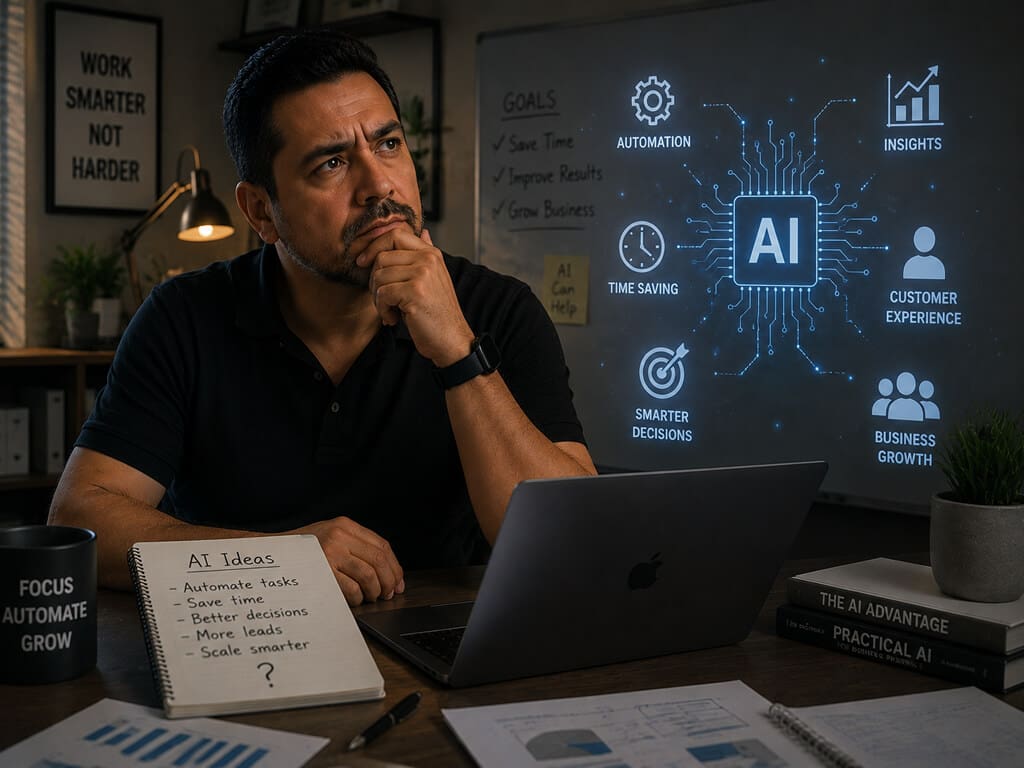
AI should not be added just because it is popular. The right use case starts with a real business problem: repetitive work, disconnected systems, slow reporting, messy data, or staff spending too much time searching for information.
Web Semantics can review your workflow and identify practical AI opportunities that could reduce manual work, improve consistency, or connect information across your existing systems.
The goal is to find practical, safe, and useful ways AI can support the way your business actually works.
LiveChat Support
Online Now
Rather Speak To Someone? Call (360) 365-5005
Select what best matches your inquiry.
Enter your Full Name to get started